
Quatro Casino App Biometric Payment Verification for New Zealand
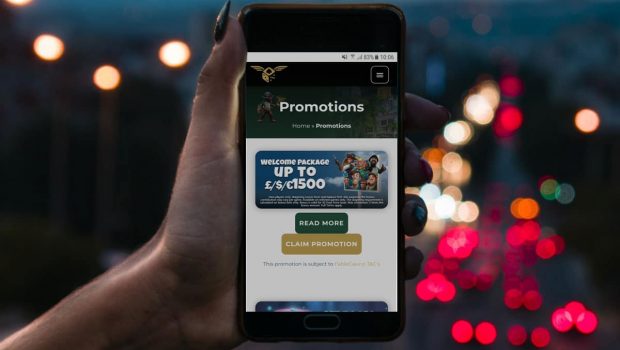
The Quatro Casino mobile app brings a seamless gaming experience to players across New Zealand, and the biometric payment confirmation feature is one of its most practical innovations. Instead of entering extensive card details or e‑wallet passwords every time a deposit is made, players can now confirm transactions with a simple fingerprint scan or facial recognition. This not only quickens the cashier process but also adds an further layer of protection that is tough to replicate with traditional text‑based credentials. The app integrates directly with the native biometric sensors built into modern smartphones, which means that the sensitive data never leaves the device. New Zealand players who value both convenience and security will find this functionality particularly appealing, as it allows them to top up their accounts in seconds while keeping their financial information safe from prying eyes. Setup is rapid, the technology is established, and the entire payment flow has been designed to adhere to high industry standards without complicating the player journey.
Security Design and Data Privacy Measures
One of the critical aspects of biometric payment confirmation is that the Quatro Casino app does not gathers, retains, or transmits the actual fingerprint or facial map. Instead, it relies fully on the cryptographic frameworks provided by the operating system. On iOS, the Secure Enclave processes the biometric verification and releases a simple yes‑or‑no assertion that the user is authentic, while on Android the BiometricPrompt API combined with Android Keystore carries out a analogous role. The app receives only a signed token that is usable for a individual transaction and ends instantly afterward, which indicates even if a communication channel were intercepted, the token could not be reused. The casino’s payment processing is also protected by TLS encryption between the app and the financial gateway, making sure that card numbers and e‑wallet credentials remain private. New Zealand privacy law and the casino’s licence obligations demand that personal and financial data be treated with care, and the biometric approach significantly diminishes the attack surface versus typing passwords on a possibly compromised keyboard. Customers who want additional protection can activate two‑factor authentication on their Quatro Casino account as a additional security layer. While no system is entirely immune to complex threats, the biometric flow removes the most common risks such as phishing, screen mirroring, and weak password reuse. The casino’s security team vigilantly tracks for anomalies, and the biometric module is frequently updated through standard app releases to keep aligned with changing operating system protections.
Real‑World Operation, Data Consumption, and Connectivity
Mobile casino players commonly think about app size and background data usage, and Quatro Casino has developed its app with these concerns in mind. The initial installer for Android devices is generally around 20 megabytes, while the iOS version sits in a similar lightweight range. Game assets, such as slot graphics and live dealer video streams, are loaded on demand, so the app does not fill up the phone’s storage excessively. During a typical session of playing five‑reel slots over a 4G connection, the app might use between 20 and 40 megabytes of data per hour, which is similar to streaming high‑quality music. Live casino games demand more bandwidth because of the real‑time video feed, and players should allocate roughly 150 to 300 megabytes per hour depending on the stream quality and network conditions. The app automatically adjusts video resolution based on the available connection speed to circumvent buffering. On Wi‑Fi, the experience is flawless, and biometric payment confirmations remain practically instantaneous regardless of the network. Even on a 3G connection the payment token is small enough to process without delay, and the deposit will show in the player’s balance within seconds under normal banking conditions. Quatro Casino’s servers are tuned for southern hemisphere traffic, and players in Auckand, Wellington, Christchurch, and regional areas should all enjoy responsive performance. Background data usage is low unless push notifications are enabled for promotional updates, which can be adjusted in the app settings.
Step‑by‑Step Setup and Configuration in New Zealand
Getting the quatrocasino mobile version app on a New Zealand device requires a simple process that varies slightly between iOS and Android because of app store policies for real‑money gaming. For Android users, the casino supplies a dedicated APK file directly from its New Zealand website. Players should head to quatrocasino-nz.com on their phone’s browser, tap the ‘Download App’ button, and confirm the download when prompted. Before the installation begins, the device must enable installations from unknown sources; a short permission prompt will appear, and once accepted, the APK installs within moments. The app icon then appears on the home screen, ready to open. On an iPhone or iPad, the process is often even easier because the casino may offer the software through a verified link that redirects to the Apple App Store. In some jurisdictions, a direct download to the home screen via Safari with a configuration profile is used, but Quatro Casino’s current New Zealand approach prefers the App Store route. After the download is complete, launching the app shows the familiar login screen. Importantly, biometric payment setup does not happen during installation; it is set up later from within the cashier settings. The entire download and installation requires only a few minutes on a typical 4G or Wi‑Fi connection, and the app size is kept deliberately compact to respect mobile data caps. Players can uninstall and reinstall the app at any time without losing their account progress, as all information is stored on Quatro Casino’s servers.
How Biometric Payment Confirmation Functions on the Quatro Casino App
When a player starts a deposit inside the Quatro Casino app, the cashier shows a list of supported payment methods such as Visa, Mastercard, Skrill, Neteller, or Paysafecard. Following selecting the preferred option and inputting the deposit amount, the app presents a confirmation step that stands apart markedly from the standard desktop flow. In place of requiring a CVV and a static password, the mobile app provides the choice to confirm the transaction using the device’s built‑in biometric system. If the player has already enrolled a fingerprint or face scan in their phone’s settings, the app simply leverages that secure hardware‑backed mechanism. The screen might display a prompt like “Confirm payment with Touch ID” or “Use Face ID to authorise,” and within a fraction of a second the transaction is processed. Behind the scenes, the app delivers a one‑time signed token to the payment gateway, never the actual biometric data. This process removes friction, lowers the risk of keylogging, and aligns with the way Kiwis already use biometrics for banking and everyday purchases. As the technology is based on the operating system’s own secure enclave, even if the device is compromised, the raw fingerprint or facial map cannot be extracted. top rated Quatro Casino’s implementation is aware of both speed and regulatory expectations, making it a trusted feature for daily use across New Zealand.
Compatible Devices and Operating System Requirements
To leverage biometric payment confirmation, users need a device that has a fingerprint sensor or a front‑facing camera capable of secure facial recognition. For iPhones, this includes any model from the iPhone 8 and up that runs iOS 14 or later, as these devices support Touch ID or Face ID through the Secure Enclave. The Quatro Casino app is fully optimized for iOS, and New Zealand users can count on smooth performance on all recent Apple handsets. On the Android side, the app is works with a wide selection of smartphones and tablets using Android 9.0 Pie or newer. The device must also include a fingerprint scanner or, in the case of some mid‑range and flagship models, a secure facial recognition system that meets Google’s BiometricPrompt API standards. While it is possible that the app works on slightly older operating systems, biometric payment functionality may be unavailable or less reliable on those versions. Tablet users with the necessary sensors can also use the feature, and the app adjusts its layout automatically to different screen sizes. Players unsure about their phone’s compatibility can simply visit the official Quatro Casino New Zealand site using their mobile browser; the download page automatically recognizes the device and provides the appropriate version. No additional hardware beyond what is included in a typical modern smartphone is needed, and the app itself does not require unusual system permissions.
How the Mobile App Compares to the Desktop Casino Experience
While Quatro Casino’s desktop site provides a complete suite of games and account tools, the mobile app offers several distinct advantages that are designed for on‑the‑go players in New Zealand. The most apparent difference is the integration of biometric payment confirmation, which is absent on the browser‑based platform because it cannot directly access the device’s secure hardware modules in the same way. The app also features a touch‑optimised lobby where game thumbnails, menus, and bet controls are larger and easier to navigate with a thumb. Push notifications enable the player to obtain alerts about new game releases, tournament invitations, and personalised bonuses, a feature not available on the desktop except through email. The game library is carefully curated to ensure every title runs smoothly on mobile processors, and while the selection is virtually identical to the desktop’s HTML5‑compatible catalogue, a few older Flash‑based titles may not be accessible. Account management features such as deposit limits, reality checks, and transaction history are equally included on both platforms, but the app positions the cashier and biometric controls front and centre. For players who change between devices, the wallet balance and loyalty points remain in perfect sync. Another practical difference is that the app can be locked with the device’s own screen lock, adding yet another security layer beyond the casino’s login. The app is not merely a resized website; it is a native application built for iOS and Android SDKs, leading to smoother animations and faster load times than a mobile browser can typically offer.
Setting up Biometric and Face ID for Deposits
Once the Quatro Casino app is installed and the player has signed in, enabling biometric payment authorization is a one‑time procedure that requires less than a minute. The first time a deposit is attempted, the cashier will offer a prompt inquiring whether the player wishes to use biometric authentication for future transactions. Tapping ‘Enable’ triggers a system‑level dialogue that requests the registered fingerprint or, on a Face ID‑enabled device, a quick face scan. This step does not register any new biometric data; it merely associates the app’s payment flow to the biometric template already saved securely on the device. Players must also create a backup app passcode as an alternative verification method in case the sensor malfunctions, such as after a reboot or when wearing a mask. Quatro Casino’s app allows the player to turn biometric payments on or off at any time from the account settings menu. It is also an option to disable biometric confirmation for specific payment methods while keeping it active for others, offering the user fine‑grained control. New Zealand players who access their device with family members should be mindful that any fingerprint registered on the phone could potentially allow a payment, so it is advisable to keep separate device profiles where possible. The configuration remains unchanged across app updates, and the biometric permission is linked to the device rather than the account, implying that logging in on a different handset will necessitate setting up the feature anew.
